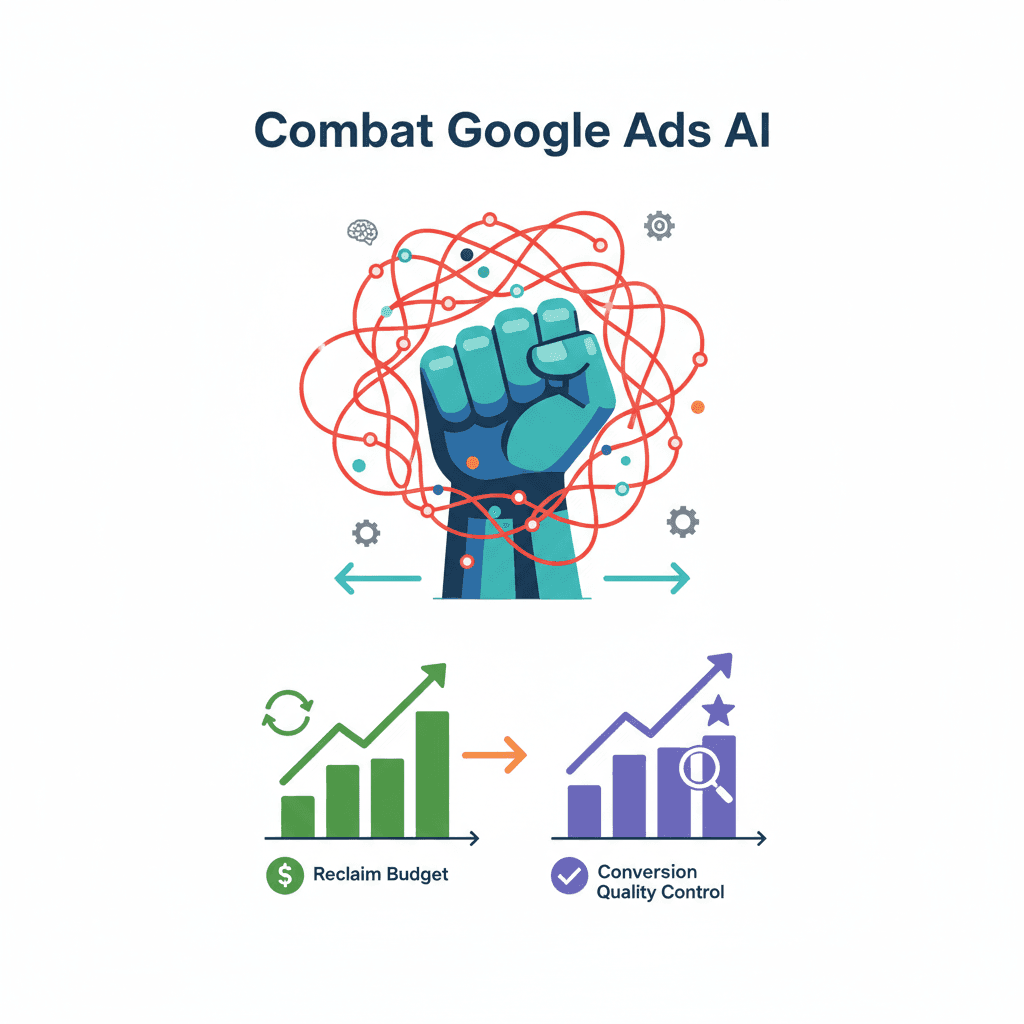
AI primarily reduces wasted ad spend by optimizing bids in real time for specific user contexts and conversion likelihood. For example, Smart Bidding strategies like Target CPA or Target ROAS can automatically adjust bids down for users less likely to convert and up for those more likely, preventing overspending on low-value clicks. Our team also uses AI insights to identify underperforming keywords or demographics for exclusion.
Do We Really Need AI In Paid Search?
The conversation around artificial intelligence in paid search is often framed as a binary choice: either we embrace it fully or risk being left behind. But is that truly the case? As a team deeply entrenched in managing significant ad spend for our clients, we’ve seen the evolution of AI from a theoretical concept to a practical, albeit complex, tool. The question isn't whether AI exists in paid search; it's how we, as practitioners, integrate it effectively into our strategies without ceding complete control. Our approach at CleverBoss has always been to combine sophisticated technology with human expertise, ensuring that AI serves our objectives, rather than dictates them. This post will explore the real impact of AI on paid search, dissect its capabilities and limitations, and offer our perspective on how to harness its power for tangible client results.
The Inevitable Integration: Where AI Already Lives in Paid Search
To ask if we need AI in paid search is almost a rhetorical question in 2026. The reality is, AI is already deeply embedded in the platforms we use daily. Google Ads, Meta Ads, and other major ad networks have been leveraging machine learning for years to optimize various aspects of campaigns. This isn't a future state; it's our current operating environment. When we set up a campaign, we’re already interacting with AI systems that influence everything from bidding to ad serving.
Automated Bidding Strategies
Consider Smart Bidding. Strategies like Target CPA, Target ROAS, Maximize Conversions, and Maximize Conversion Value are all powered by advanced machine learning algorithms. These systems analyze vast amounts of data points in real time, far beyond what any human could process, to predict conversion likelihood and adjust bids accordingly. We’ve seen clients achieve significant improvements in efficiency and scale when these strategies are properly implemented and monitored. For example, a recent e-commerce client saw a 15% increase in conversion volume while maintaining their target ROAS after we transitioned their campaigns to a well-tuned Target ROAS strategy. This wasn’t magic; it was AI executing bids based on predictive analytics, guided by our strategic input. To learn more about optimizing these strategies, we recommend reviewing our guide on Google Ads Smart Bidding.
Dynamic Creative Optimization and Ad Copy Generation
Responsive Search Ads (RSAs) are another prime example. We provide multiple headlines and descriptions, and the AI tests various combinations to determine which permutations perform best for specific search queries and user contexts. This allows for hyper-relevant ad delivery at scale. Beyond RSAs, we're seeing generative AI tools assist in drafting initial ad copy, suggesting headlines, and even creating visual assets for display and social campaigns. While these tools provide a strong starting point, our team always refines and tests the output, ensuring brand voice and strategic messaging are intact. The AI provides the raw material; we sculpt it into effective advertisements.
Audience Segmentation and Targeting
AI plays a crucial role in identifying and reaching target audiences. Lookalike audiences, custom segments, and even broad audience targeting within platforms like Meta are heavily reliant on machine learning to find users most likely to convert. The algorithms analyze user behavior, demographics, interests, and past interactions to build sophisticated audience profiles. This enables us to reach potential customers with greater precision than ever before, reducing wasted ad spend. Our team often uses these AI-driven audience insights to inform our Meta Ads targeting strategies.
The Human Element: Why Our Expertise Remains Indispensable
While AI handles data processing and optimization at an unprecedented scale, it lacks critical human attributes: strategic foresight, nuanced understanding of business objectives, and the ability to adapt to unforeseen market shifts. This is where our team's expertise becomes not just valuable, but essential.
Strategic Planning and Goal Alignment
AI doesn't understand your business model, your long-term growth objectives, or the competitive landscape. It optimizes for the metrics you feed it. If we simply tell an AI to "maximize conversions," it might do so at a cost per acquisition that's unsustainable for profitability. Our role is to define the strategic goals, set appropriate guardrails, and translate complex business objectives into measurable KPIs that the AI can work towards. We determine the acceptable CPA, the target ROAS, and the overall budget allocation, ensuring AI efforts align with the client's broader marketing and business strategies.
Interpreting Data and Identifying Opportunities
AI provides data, but we interpret it. We look beyond the raw numbers to understand why something is performing well or poorly. Is a sudden dip in conversions due to a technical issue, a new competitor, or a shift in consumer behavior? AI can flag the dip, but it often can't provide the qualitative context needed for a strategic response. Our analysts delve into performance reports, conduct competitive analysis, and identify opportunities for expansion or optimization that AI might overlook. This includes understanding the nuances of search intent and how it evolves, which is critical for effective paid search campaigns.
Creative Development and Brand Messaging
While AI can generate ad copy, it struggles with true creativity, emotional resonance, and maintaining a consistent brand voice. Our copywriters and strategists craft compelling narratives, develop unique selling propositions, and ensure that every ad message aligns with the client's brand identity. We test different creative angles, understand cultural nuances, and refine messaging based on qualitative feedback, not just quantitative clicks. The human touch ensures ads don't just perform, but also connect with the audience on a deeper level.
Troubleshooting and Problem Solving
AI systems are not infallible. They can be susceptible to bad data, misconfigurations, or unexpected market changes that lead to suboptimal performance. When an AI-driven campaign goes off track, it requires human intervention to diagnose the root cause and implement corrective measures. We've seen instances where an automated bidding strategy, left unchecked, spent significant budget on irrelevant queries because of a broad match keyword gone rogue. Our team caught it, implemented negative keywords, and recalibrated the strategy, preventing further waste. This proactive monitoring and problem-solving are critical for managing ad spend effectively.
Navigating the AI Landscape: Best Practices for Paid Search Professionals
Our experience shows that the most successful paid search strategies in the age of AI involve a collaborative approach. It's about leveraging AI's strengths while mitigating its weaknesses with human oversight and strategic direction.
Define Clear Objectives and KPIs
Before implementing any AI-driven strategy, we ensure our clients have clearly defined business objectives and measurable key performance indicators. Is the goal lead generation, e-commerce sales, brand awareness, or something else? The AI needs specific targets to optimize towards. For instance, if the goal is to generate qualified leads, we focus on optimizing for form submissions or phone calls, not just website clicks. This clarity is paramount for AI to deliver relevant results.
Implement Robust Tracking and Attribution
AI is only as good as the data it receives. Accurate conversion tracking, proper attribution models, and clean data feeds are non-negotiable. Our team meticulously sets up conversion tracking, integrates with CRM systems, and ensures data integrity across all platforms. Without reliable data, AI will optimize for flawed signals, leading to inefficient spend. We often conduct thorough audits to ensure everything is correctly configured, which is a foundational step in any successful paid search strategy.
Set Appropriate Guardrails and Budgets
While AI can optimize bids, we set the overall budget and daily caps. We also establish negative keyword lists to prevent irrelevant traffic, especially when using broader match types or Performance Max campaigns. For a client in the B2B SaaS space, we identified a significant amount of spend going towards consumer-oriented search terms. By actively managing negative keywords, we were able to cut Google Ads waste by 40%, redirecting budget to more qualified leads.
Continuous Monitoring and Iteration
AI is not a "set it and forget it" solution. Our team continuously monitors campaign performance, analyzes trends, and makes adjustments. This includes reviewing search query reports, evaluating audience performance, and testing new creative variations. We treat AI as a powerful assistant, not a replacement for active management. We regularly audit AI recommendations and challenge assumptions, ensuring the strategy remains aligned with evolving business needs and market conditions.
Embrace Experimentation
The AI landscape is constantly evolving. We encourage our clients to embrace a culture of experimentation. This means testing new AI features, trying different bidding strategies, and exploring how generative AI can enhance creative processes. We allocate small portions of the budget for these tests, allowing us to learn and adapt without significant risk. For example, we recently experimented with Open AI advertising tools to generate initial ad copy concepts, which significantly sped up our creative ideation phase.
The Future of Paid Search: A Symbiotic Relationship
Our perspective is that the future of paid search is not about AI replacing humans, but rather about a symbiotic relationship where AI augments human capabilities. AI handles the heavy lifting of data analysis, real-time bidding, and scaled optimization, freeing up our team to focus on higher-level strategy, creative innovation, and client communication. We believe this collaborative model is the most effective way to drive superior results for our clients.
Consider the complexity of managing campaigns across multiple platforms, each with its own AI-driven features. Our team, as a leading digital marketing agency, navigates these complexities daily. We're not just implementing AI; we're integrating it into a broader digital strategy that includes SEO services, paid social advertising, and programmatic advertising. The goal is always to create a cohesive, high-performing ecosystem.
The real question isn't whether we need AI, but how skillfully we integrate it. We see AI as an incredibly powerful tool in our arsenal, allowing us to achieve efficiencies and scale that were unimaginable a decade ago. However, it requires a human hand to steer it, to interpret its outputs, and to ensure it remains aligned with the strategic vision of our clients. Without that human oversight, even the most advanced AI can lead to misdirected efforts and wasted resources.
Conclusion
In conclusion, the notion of whether we "need" AI in paid search is largely settled; it's already an integral part of the ecosystem. The more pertinent question is how we, as paid search professionals, choose to engage with it. Our team firmly believes that the most effective approach is one of informed collaboration. We leverage AI's unparalleled ability to process data and optimize at scale, but we never abdicate our strategic oversight, creative input, or critical problem-solving responsibilities. AI empowers us to achieve greater efficiency and reach, but it's our human expertise that defines the strategy, interprets the nuances, and ensures the campaigns deliver genuine business value. We see AI not as a replacement, but as a powerful partner that enhances our capacity to deliver exceptional results for our clients.
Ready to navigate the complexities of AI in paid search with a team that combines cutting-edge technology with seasoned expertise? Our specialists are here to help you develop and execute a strategy that leverages AI effectively to achieve your specific business goals. Contact us today to discuss how we can elevate your paid search performance.