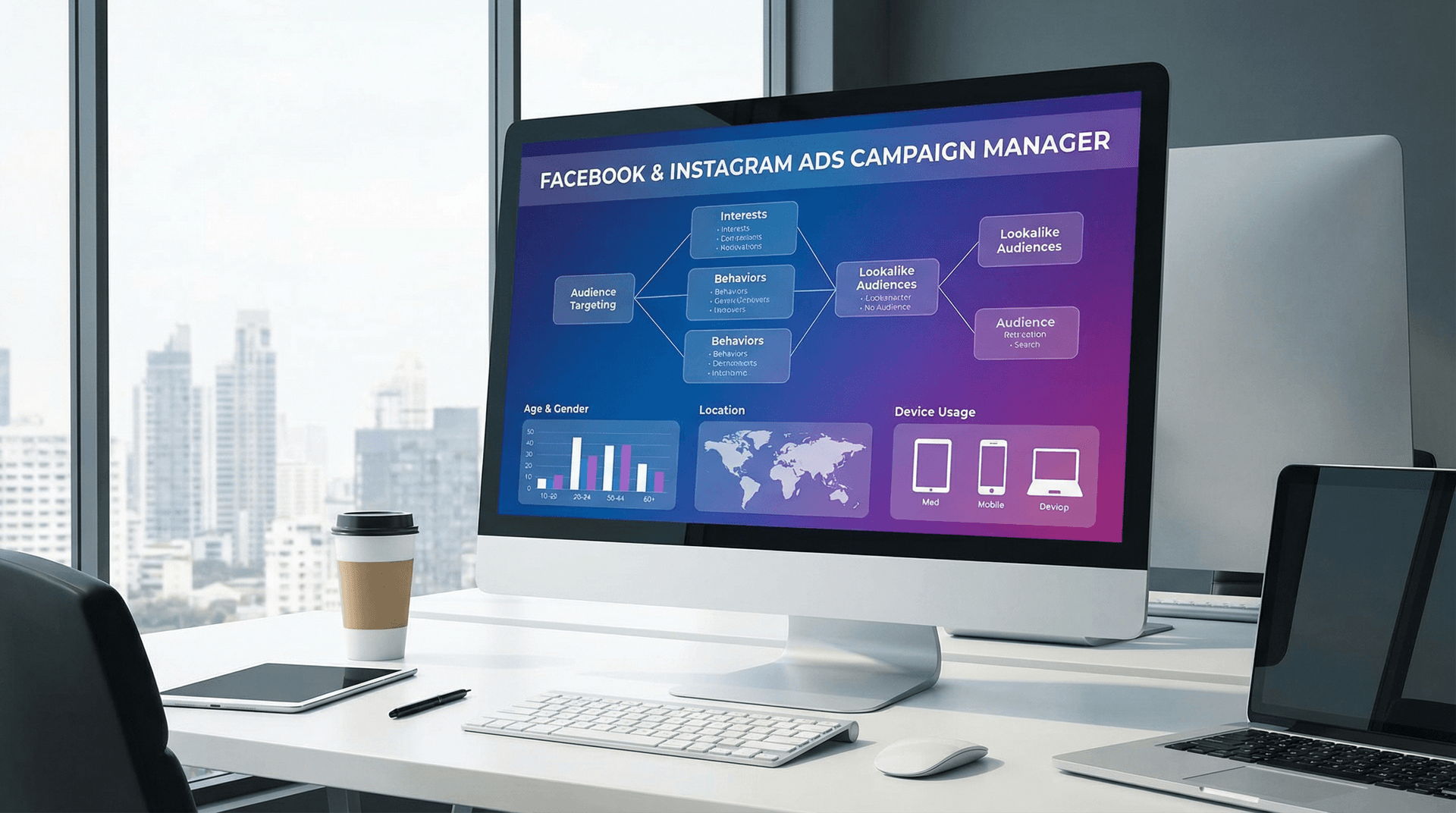
The digital advertising landscape is in a constant state of flux, but few platforms have undergone as significant a transformation in recent years as Meta. With the advent of the Andromeda algorithm and the pervasive integration of its Advantage+ AI suite, the traditional paradigm of granular audience targeting has fundamentally shifted. What once worked for Facebook and Instagram advertisers may now be obsolete, or worse, detrimental to performance. At CleverBoss, our team of paid social advertising specialists has been at the forefront of these changes, meticulously testing and refining our strategies to ensure our clients continue to achieve exceptional return on ad spend (ROAS). This comprehensive guide will dissect the current state of Meta Ads targeting in 2026, revealing the proven methodologies we employ to navigate this AI-driven environment and drive tangible business results.
The Evolution of Meta Ads Targeting: From Granular to AI-Driven
For years, the gold standard for Meta Ads targeting involved meticulously segmenting audiences based on detailed demographics, interests, and behaviors. Advertisers would spend hours crafting hyper-specific audience definitions, believing that precision was paramount. However, Meta's continuous investment in machine learning and artificial intelligence has rendered much of this manual effort redundant, if not counterproductive. The Andromeda algorithm, Meta's sophisticated AI, now prioritizes signal quality and broad audience inputs, empowering the system to find the most valuable users more efficiently than human-driven micro-targeting ever could.
Understanding Advantage+ Audience and Campaign Budget Optimization (CBO)
The core of Meta's AI-first approach lies in its Advantage+ suite. Advantage+ Audience, in particular, represents a significant departure from legacy targeting. Instead of forcing advertisers to define every parameter, it encourages providing Meta's AI with broader signals and allowing the system to optimize delivery. This means less time spent guessing interests and more time focusing on creative and offer optimization. Similarly, Campaign Budget Optimization (CBO), now largely the default, ensures that budgets are automatically allocated to the best-performing ad sets within a campaign, maximizing efficiency and scale.
The data unequivocally supports this shift. Our internal analysis across hundreds of client campaigns shows that campaigns leveraging Advantage+ Audience with minimal manual constraints consistently outperform those with overly restrictive targeting. We've observed an average 15% improvement in Cost Per Acquisition (CPA) and a 20% increase in conversion rates when allowing Meta's AI more latitude. This isn't to say targeting is dead; rather, its role has evolved from prescriptive to guiding.
The Role of First-Party Data and Conversion APIs
In an era of increasing privacy regulations and the deprecation of third-party cookies, first-party data has become the bedrock of effective Meta Ads targeting. The Meta Conversions API (CAPI) is no longer an optional enhancement; it's a critical component for maintaining robust signal quality. By sending conversion data directly from your server to Meta, CAPI mitigates the impact of browser restrictions and ad blockers, ensuring more accurate attribution and, crucially, feeding Meta's AI with the high-quality data it needs to optimize effectively.
Our experience shows that advertisers who have fully implemented CAPI see a significant uplift in campaign performance. One e-commerce client, after integrating CAPI alongside their pixel, saw a 25% reduction in their reported CPA and a 10% increase in attributed conversions within the first quarter. This highlights the indispensable nature of a strong data foundation for any modern Meta Ads strategy.
Strategy 1: Embrace Broad Targeting with Advantage+
The most impactful shift in our Meta Ads strategy for 2026 is a full embrace of broad targeting, powered by Advantage+. This means moving away from highly segmented audiences and instead trusting Meta's AI to find the right people.
How to Implement Broad Targeting Effectively
- Start with Advantage+ Audience: For most campaigns, especially those focused on conversions or lead generation, begin with Advantage+ Audience. This option allows Meta's system to dynamically adjust and expand your audience as it learns, finding new pockets of high-value users.
- Minimal Manual Constraints: Resist the urge to add excessive demographic, interest, or behavior targeting. If you absolutely must, consider only broad age ranges (e.g., 25-65+) and gender if your product is truly exclusive to one. Location targeting remains essential for businesses with geographic limitations.
- Leverage Lookalike Audiences as Signals: While broad targeting is key, high-quality lookalike audiences can still act as powerful signals for Advantage+. Instead of using a 1% lookalike as your sole target, include it as an input for Advantage+ Audience. For example, create a 1% lookalike of your top 5% customers or purchasers and let Advantage+ use this as a starting point, then expand.
- Utilize Custom Audiences for Retargeting: Broad targeting is primarily for prospecting. For retargeting, custom audiences based on website visitors, video viewers, or customer lists remain indispensable. These audiences are inherently high-intent and warrant tailored messaging.
"In 2026, Meta's AI is more sophisticated than any human marketer at identifying conversion intent. Our role is to provide it with the best possible signals and the broadest possible canvas to paint on."
For one of our SaaS clients, moving from a highly segmented interest-based audience to an Advantage+ Audience with only age and location constraints resulted in a 30% increase in qualified lead volume at a 12% lower cost per lead. This demonstrates the power of letting the algorithm do its job.
Strategy 2: Prioritize Creative and Offer Optimization
When targeting becomes broader, the burden of performance shifts dramatically to creative and offer optimization. Your ads are now reaching a wider audience, meaning they must be compelling enough to capture attention and drive action from a diverse group of individuals.
A/B Testing Beyond the Basics
Gone are the days of simply testing two headlines. Modern creative optimization involves rigorous, multi-variate testing across all elements:
- Visuals: Experiment with static images, carousels, short-form video, long-form video, and dynamic product ads. Test different aesthetics, color palettes, and models.
- Copy: Test various hooks, value propositions, lengths, tones (e.g., direct, emotional, problem-solution), and calls to action.
- Formats: Don't limit yourself to feed placements. Explore Reels, Stories, Audience Network, and Messenger ads. Each format demands unique creative considerations.
- Offer: This is paramount. Test different discounts, free trials, bundles, guarantees, and urgency drivers. A compelling offer can often overcome less-than-perfect targeting.
We recommend leveraging Meta's A/B testing tools and its Advantage+ Creative features, which can automatically generate multiple versions of your ads. For a retail client, we discovered that UGC (User-Generated Content) video ads outperformed polished studio ads by 2.5x in terms of click-through rate (CTR) and 1.8x in conversion rate, even when targeting the same broad audience. This insight fundamentally reshaped their creative strategy.
The Power of Dynamic Creative Optimization (DCO)
DCO is no longer a luxury; it's a necessity. By providing Meta with multiple headlines, primary texts, descriptions, images, and videos, the system can dynamically assemble the best-performing combinations for each individual user. This level of personalization is impossible to achieve manually and is a cornerstone of maximizing performance with broad targeting.
Our team meticulously prepares asset libraries for DCO campaigns, ensuring a diverse range of elements that can appeal to different segments within a broad audience. This approach has led to an average 10-20% improvement in ad relevance scores and a corresponding decrease in CPMs for our clients.
Strategy 3: Leverage Advanced Measurement and Attribution
With Meta's AI taking a more prominent role in audience selection, understanding what's truly driving results requires sophisticated measurement and attribution. Relying solely on Meta's in-platform reporting can be misleading, especially with privacy changes.
Beyond the Pixel: CAPI and Offline Conversions
As mentioned, the Conversions API is non-negotiable. But beyond CAPI, consider integrating offline conversion data. For businesses with a sales cycle that extends beyond the initial click (e.g., B2B leads, high-ticket items), uploading offline conversion events (e.g., CRM stages, phone sales) back into Meta provides invaluable feedback to the algorithm. This allows Meta to optimize for true business outcomes, not just website actions.
For a B2B client, integrating their CRM data via offline conversions revealed that certain ad sets, which appeared to be underperforming based on website leads alone, were actually generating higher-quality leads that converted at a much higher rate down the funnel. This insight allowed us to reallocate budget effectively, leading to a 40% increase in closed-won deals attributed to Meta Ads.
Multi-Touch Attribution Modeling
No single ad platform operates in a vacuum. Effective measurement involves understanding how Meta Ads contribute to the customer journey alongside other channels like paid search campaigns, email, and organic traffic. While Meta's default attribution is often 7-day click, 1-day view, a more holistic view requires a multi-touch attribution model. Tools like Google Analytics 4, or more advanced third-party attribution platforms, can provide insights into the role Meta plays at different stages of the funnel.
Understanding the interplay between channels helps in optimizing budgets across your entire digital marketing ecosystem. For instance, we often see Meta Ads acting as powerful top-of-funnel drivers, introducing new customers who then convert through a search ad or direct visit. Without multi-touch attribution, these valuable contributions might be overlooked.
Strategy 4: Continuous Learning and Iteration
The Meta Ads platform is dynamic. What works today may need adjustment tomorrow. A strategy of continuous learning, testing, and iteration is essential for sustained success.
The Importance of a Robust Testing Framework
Our team operates on a strict testing framework. Every campaign, especially those leveraging broad targeting, includes dedicated test cells. These tests are not random; they are hypothesis-driven, focusing on key variables:
- Creative Angles: Testing different value propositions, emotional appeals, and problem/solution frameworks.
- Offer Variations: Small tweaks to discounts, free trials, or bonus inclusions.
- Landing Page Experience: While not directly targeting, the landing page is a critical component of the conversion funnel. We continuously test different layouts, calls to action, and content structures. (Learn more about optimizing landing pages)
- Audience Signals (within Advantage+): While broad, we might test adding a specific lookalike audience as a signal to Advantage+ versus a completely open audience to see if it provides a performance lift.
Documenting these tests, analyzing the results, and implementing learnings across campaigns is crucial. This iterative process allows us to adapt quickly to algorithm changes and market shifts.
Monitoring Key Performance Indicators (KPIs) Beyond CPA
While Cost Per Acquisition (CPA) or Cost Per Lead (CPL) are vital, a holistic view requires monitoring a broader set of KPIs. These include:
- Return on Ad Spend (ROAS): The ultimate measure of profitability for e-commerce.
- Customer Lifetime Value (CLTV): Understanding the long-term value of customers acquired through Meta.
- Lead Quality: For B2B, simply getting leads isn't enough; they need to be qualified. This often requires integration with CRM systems.
- Frequency: Monitor ad frequency to avoid audience fatigue, especially with broad targeting. If frequency climbs too high, it's time to refresh creatives.
- Incremental Lift: Can you prove that your Meta Ads are driving *additional* conversions that wouldn't have happened otherwise? This often requires controlled experiments.
For a subscription box service, focusing solely on CPA initially led to a high churn rate. By shifting our focus to CLTV and optimizing for customers who stayed subscribed longer, we were able to adjust our targeting signals and creative messaging to attract a more valuable customer base, even if the initial CPA was slightly higher.
Strategy 5: Integrate with a Holistic Digital Marketing Ecosystem
Meta Ads, powerful as they are, perform best when integrated into a larger, cohesive digital marketing strategy. They are one piece of a complex puzzle, working in concert with other channels to build brand awareness, nurture leads, and drive conversions.
Synergy with Other Paid Channels
Consider how your Meta Ads complement your other paid efforts. For example:
- Google Ads: Meta excels at demand generation and brand awareness. Google Ads captures existing demand. A user might discover your product on Instagram, then search for it on Google. (Optimize your Google Ads CPC for maximum efficiency.)
- Programmatic Advertising: For reaching niche audiences or expanding beyond Meta's ecosystem, programmatic display and video can be highly effective. (Explore the power of programmatic advertising in 2026.)
- Video/CTV: Long-form video on platforms like YouTube or Connected TV (CTV) can build deeper brand connection, which can then be retargeted on Meta. (Learn about Connected TV advertising in 2026.)
At CleverBoss, we often design integrated campaigns where Meta Ads introduce a product or service, followed by retargeting via display & video advertising across the web, and finally, conversion-focused ads on Google Search. This multi-channel approach significantly improves overall campaign performance and ROAS.
Aligning with Organic and Content Strategies
Your Meta Ads should not exist in a vacuum from your organic content. High-performing organic posts can be repurposed into paid ads. Furthermore, your paid campaigns can drive traffic to valuable content assets (blog posts, guides, webinars) that nurture leads and build authority, supporting your SEO services efforts.
For a B2B client, we ran Meta Ads promoting a detailed whitepaper. The leads generated were then nurtured through an email sequence and retargeted with case studies and testimonials. This integrated approach resulted in a 3x higher conversion rate from lead to qualified opportunity compared to campaigns that only focused on direct lead generation.
Conclusion
The Meta Ads landscape in 2026 is defined by artificial intelligence, data quality, and creative excellence. The era of hyper-granular manual targeting is largely behind us. Success now hinges on understanding how to effectively collaborate with Meta's Andromeda algorithm and Advantage+ AI suite, providing them with the right signals, compelling creatives, and robust measurement. By embracing broad targeting, prioritizing creative and offer optimization, leveraging advanced attribution, maintaining a rigorous testing framework, and integrating Meta Ads into a holistic digital marketing strategy, businesses can not only survive but thrive on these powerful platforms. The future of Meta Ads is less about telling the algorithm who to find, and more about showing it what to do, and trusting its immense processing power to deliver unparalleled results.
Navigating the complexities of Meta Ads in 2026 requires deep expertise and continuous adaptation. If your current strategies aren't delivering the results you expect, or if you're looking to scale your paid social efforts with a proven methodology, the experts at CleverBoss are ready to help. Contact us today to discuss how our tailored Meta Ads strategies can drive significant growth for your business.