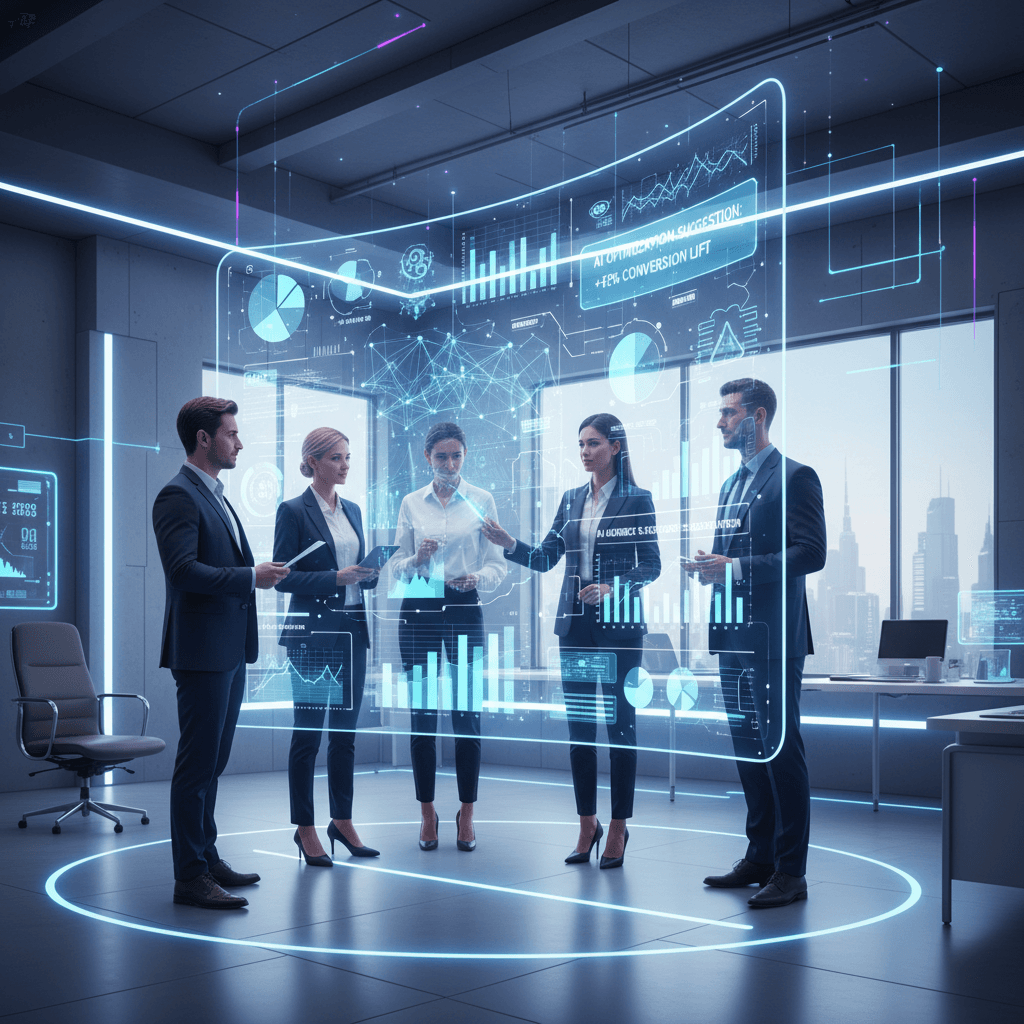
The digital marketing landscape is evolving at warp speed, and at the heart of this transformation is Artificial Intelligence. Every day, it seems, there's a new AI tool or capability promising to revolutionize how we reach, engage, and convert audiences. From automating ad bids to generating entire marketing campaigns, AI's footprint is expanding rapidly. This raises a fundamental question that's on the minds of many marketers and business leaders: will digital marketing be replaced by AI? Or, more specifically for those of us in paid media, will AI render human expertise obsolete?
At CleverBoss, we're not just observing this shift; we're actively integrating AI into our strategies to deliver superior results for our clients. Our perspective is clear: AI is not a replacement for human ingenuity, but rather a powerful co-pilot. It's a tool that amplifies our capabilities, automates tedious tasks, and uncovers insights that were previously impossible to glean. In this comprehensive guide, we'll dive deep into how AI is reshaping digital marketing, where its strengths lie, and why the human element remains indispensable, particularly in the nuanced world of paid media.
The Rise of AI in Digital Marketing: A Paradigm Shift
AI's integration into digital marketing isn't a future concept; it's happening right now. We're seeing its influence across virtually every facet of our work, from the initial strategy formulation to campaign optimization and reporting. This isn't just about simple automation; it's about intelligent systems that can learn, adapt, and predict.
Automated Campaign Management and Optimization
One of the most immediate and impactful applications of AI in paid media is in campaign management and optimization. Think about the sheer volume of data involved in running successful paid search campaigns or paid social advertising. AI algorithms can process this data at a scale and speed that no human ever could. They analyze performance metrics, identify trends, and make real-time adjustments to bids, budgets, and targeting parameters.
For instance, AI-powered bidding strategies in platforms like Google Ads can optimize for conversions or conversion value, adjusting bids hundreds of times a day based on a multitude of signals like device, location, time of day, and user behavior. This level of granular optimization was once a manual, labor-intensive process, but now AI handles it with remarkable efficiency. Our blog post, "The Complete Guide to Google Ads Smart Bidding in 2026," delves into how these systems work and why they're becoming essential.
Beyond bidding, AI assists in identifying underperforming ad creatives, suggesting new audience segments, and even predicting future campaign performance. This frees up human marketers from repetitive tasks, allowing them to focus on higher-level strategic thinking.
Personalization at Scale
The holy grail of marketing has always been personalization. Delivering the right message to the right person at the right time. AI makes this not just possible, but scalable. By analyzing vast amounts of user data, including browsing history, purchase behavior, and demographic information, AI can create highly individualized user profiles.
This allows for dynamic ad creative optimization, where different versions of an ad are shown to different users based on their predicted preferences. It also powers personalized content recommendations and email sequences, making every interaction feel tailor-made. For example, in programmatic advertising, AI algorithms can decide which ad to show a specific user on a specific website in milliseconds, based on their profile and likelihood to convert. Our article, "Programmatic Advertising in 2026: How It Works and Why It Dominates Digital Media," further explores this capability.
Content Generation and Creative Assistance
Generative AI has exploded onto the scene, offering capabilities that seemed like science fiction just a few years ago. AI tools can now assist in generating ad copy, headlines, social media posts, and even video scripts. While the output may not always be perfect, it provides an excellent starting point, significantly reducing the time spent on brainstorming and drafting.
For visual content, AI can generate images, modify existing ones, and even create short video clips. This is particularly useful for A/B testing different creative variations at scale, allowing marketers to quickly identify what resonates best with their target audience. However, it's crucial to remember that AI-generated content often requires human refinement to ensure it aligns with brand voice, tone, and strategic objectives. It's a powerful assistant, not a standalone creator.
Where AI Excels: The Unbeatable Strengths
To understand the future of digital marketing, we must first acknowledge AI's undeniable strengths. These are the areas where AI consistently outperforms human capabilities, making it an invaluable asset.
Data Processing and Analysis
AI's ability to process and analyze massive datasets is unparalleled. In digital marketing, we're constantly bombarded with data points: clicks, impressions, conversions, bounce rates, time on page, demographics, psychographics, and so much more. Humans simply cannot sift through and make sense of this volume of information efficiently. AI algorithms, however, thrive on it.
They can identify subtle patterns, correlations, and anomalies that would be invisible to the human eye. This leads to more accurate predictions, better segmentation, and more effective optimization. For instance, AI can pinpoint exactly which negative keywords are draining your budget in Google Ads, a task that would take a human analyst hours or days to do manually and less precisely. Our guide, "Cut Google Ads Waste by 40%: Master Negative Keyword Strategies," highlights the importance of this data-driven approach.
Speed and Efficiency
AI operates at a speed that humans cannot match. It can execute tasks, analyze data, and make decisions in real-time, often in milliseconds. This speed is critical in dynamic environments like programmatic ad buying or live bidding auctions, where opportunities can appear and disappear in an instant.
Automating repetitive and time-consuming tasks also drastically improves efficiency. Marketers can spend less time on manual reporting, bid adjustments, or audience segmentation, and more time on strategic planning, creative development, and client communication. This efficiency doesn't just save time; it often leads to better performance due to continuous, instantaneous optimization.
Predictive Analytics and Forecasting
One of AI's most exciting capabilities is its ability to predict future outcomes. By analyzing historical data and identifying trends, AI can forecast campaign performance, predict consumer behavior, and even anticipate market shifts. This allows marketers to be proactive rather than reactive.
Imagine knowing with a high degree of certainty which ad creative will perform best before you even launch the campaign, or understanding how a change in bidding strategy might impact your ROI next quarter. This predictive power enables more informed decision-making, better resource allocation, and ultimately, a stronger competitive edge. For businesses looking to leverage this, AI consulting can help integrate these predictive capabilities effectively.
The Irreplaceable Human Element: Why Marketers Aren't Going Anywhere
Despite AI's impressive capabilities, there are fundamental aspects of digital marketing where human intelligence, creativity, and empathy remain absolutely essential. AI is a tool, not a sentient strategist.
Strategic Vision and Goal Setting
AI can optimize to achieve a goal, but it cannot define the goal itself. Setting overarching business objectives, understanding market positioning, identifying target audiences, and crafting a holistic marketing strategy requires human insight, intuition, and business acumen. What does success look like for a client? What are their long-term aspirations? These are questions only a human can answer and translate into actionable marketing strategies.
A machine can tell you the most cost-effective way to get clicks, but it can't tell you if those clicks are from the right type of customer for your brand's long-term growth. That strategic vision, the ability to see the bigger picture and connect marketing efforts to broader business goals, is uniquely human.
Creativity, Empathy, and Emotional Intelligence
Marketing, at its core, is about connecting with people. It's about understanding their desires, fears, aspirations, and pain points. This requires empathy and emotional intelligence, qualities that AI, despite its advancements, fundamentally lacks. While AI can generate ad copy, it struggles with true creative ideation, storytelling, and crafting messages that evoke genuine emotion and build lasting brand loyalty.
Human marketers bring creativity to the table, developing innovative campaign concepts, crafting compelling narratives, and designing visually striking ads that capture attention and resonate deeply. They understand cultural nuances, humor, and the subtle art of persuasion. This is particularly true in areas like Display & Video Advertising or Video / CTV / OTT campaigns, where emotional connection is paramount.
"AI can optimize to achieve a goal, but it cannot define the goal itself. Setting overarching business objectives, understanding market positioning, identifying target audiences, and crafting a holistic marketing strategy requires human insight, intuition, and business acumen."
Client Relationships and Communication
Digital marketing agencies are built on relationships. Clients trust us not just for our technical expertise, but for our ability to understand their business, communicate effectively, and act as a true partner. AI cannot build rapport, navigate complex client feedback, or provide the reassurance and strategic counsel that comes from a human expert.
Effective communication, negotiation, problem-solving, and managing expectations are all soft skills that are critical for client success and retention. When a campaign hits a snag, clients want to speak with a human who can explain the situation, offer solutions, and provide a path forward, not an algorithm. This human touch is invaluable.
Adaptability and Critical Thinking in Unforeseen Circumstances
While AI is excellent at pattern recognition and optimizing within defined parameters, it struggles with truly novel situations or unexpected market disruptions. The COVID-19 pandemic, for example, threw traditional marketing models into disarray. Human marketers had to quickly adapt, pivot strategies, and think critically outside the box, often with limited historical data to guide AI models.
Similarly, changes in platform policies (like privacy updates), sudden shifts in consumer sentiment, or emerging cultural trends require human judgment and the ability to connect seemingly disparate pieces of information to form a new strategy. AI can process information, but it doesn't possess the critical thinking skills to truly innovate or navigate uncharted territory.
The Future: A Symbiotic Relationship, Not a Replacement
The most realistic and effective vision for the future of digital marketing is one of symbiosis: a powerful partnership between human marketers and AI. Instead of replacing humans, AI will augment our abilities, making us more efficient, more insightful, and ultimately, more effective.
AI as a Powerful Assistant and Enabler
Think of AI as the ultimate marketing assistant. It handles the heavy lifting of data analysis, optimization, and repetitive tasks. This frees up human marketers to focus on what they do best: strategy, creativity, client relations, and complex problem-solving. We'll move from being data processors to data interpreters, from campaign managers to strategic architects.
For example, an AI might identify a new high-performing audience segment, but it's the human marketer who will craft the compelling narrative and creative assets to truly resonate with that segment. AI can tell you what is happening, but humans provide the why and the what next in a strategic sense.
The Evolution of Marketing Roles
The rise of AI will undoubtedly shift the skills required for digital marketers. Roles will evolve, emphasizing skills that AI cannot replicate. Marketers will need to become proficient in:
- AI Literacy: Understanding how AI works, its capabilities, and its limitations.
- Strategic Thinking: The ability to define objectives, interpret AI insights, and translate them into actionable strategies.
- Creativity and Innovation: Developing unique ideas, compelling narratives, and engaging content that stands out.
- Data Storytelling: Communicating complex AI-driven insights in a clear, understandable, and persuasive manner to clients and stakeholders.
- Ethical Considerations: Navigating the ethical implications of AI use, particularly concerning data privacy and bias.
- Emotional Intelligence: Building strong client relationships and understanding consumer psychology.
This evolution means that continuous learning and adaptation will be more critical than ever. Agencies like CleverBoss are already investing heavily in AI consulting and training to ensure our teams are at the forefront of this shift, ready to leverage AI for maximum client benefit.
Enhanced Performance and ROI
The ultimate benefit of this human-AI partnership is enhanced performance and a stronger return on investment for businesses. By combining AI's analytical power and efficiency with human strategic oversight and creativity, campaigns can be optimized to an unprecedented degree. We can achieve higher conversion rates, lower costs per acquisition, and more effective brand building.
Consider the synergy: AI identifies a trend in user behavior, a human marketer designs a creative campaign around that trend, AI then optimizes the delivery of that campaign in real-time, and finally, a human analyzes the overall impact, refining the strategy for future iterations. This iterative, data-driven, and creatively inspired approach is the future of high-performance digital marketing.
Navigating the AI Landscape: Practical Advice for Marketers
So, how should digital marketers and businesses prepare for this AI-driven future? It's not about fearing AI; it's about embracing it strategically.
Embrace AI Tools and Experiment
Don't shy away from AI. Actively seek out and experiment with AI-powered tools for various marketing tasks. This could include AI writing assistants, image generators, analytics platforms with predictive capabilities, or advanced bidding algorithms. The more you understand these tools, the better equipped you'll be to leverage them effectively. Start small, test, learn, and scale up.
Focus on Human-Centric Skills
While AI handles the data, double down on skills that are uniquely human. Hone your strategic thinking, develop your creative muscles, improve your communication and storytelling abilities, and cultivate strong client relationships. These are the skills that will differentiate you in an AI-augmented world. For example, while AI can write a basic landing page, a human expert still needs to apply conversion psychology and design principles to create 10 Landing Page Elements That Dramatically Increase Conversions.
Understand Your Data
AI is only as good as the data it's fed. Ensure your data collection is robust, clean, and ethical. Understand your analytics platforms and how to interpret the insights AI provides. A human still needs to validate AI's recommendations and ensure they align with real-world business context. This is crucial for areas like SEO Services, where understanding search intent and user behavior goes beyond raw numbers.
Stay Updated and Continuously Learn
The AI landscape is changing incredibly fast. What's cutting-edge today might be standard practice tomorrow. Commit to continuous learning. Follow industry leaders, read research, attend webinars, and experiment with new technologies. This proactive approach will ensure you remain relevant and effective. Our blog post, "How AI Is Transforming Digital Marketing in 2026: What You Need to Know Now," is a great starting point.
Partner with Experts
For many businesses, integrating advanced AI into their marketing strategies can be daunting. Partnering with an agency that specializes in AI-driven marketing, like CleverBoss, can provide a significant advantage. We have the expertise, tools, and experience to implement sophisticated AI solutions, allowing you to reap the benefits without the steep learning curve or significant in-house investment. Our AI Consulting services are designed specifically for this purpose.
Conclusion
The question "will digital marketing be replaced by AI" is best answered with a resounding "no." Instead, digital marketing is being transformed by AI. The future isn't about AI replacing humans; it's about AI empowering humans to achieve unprecedented levels of efficiency, personalization, and strategic insight. AI handles the heavy lifting, the data crunching, and the real-time optimization, while human marketers provide the vision, creativity, empathy, and strategic direction that truly connect with audiences and drive business growth.
At CleverBoss, we believe this human-AI partnership is the most powerful model for success in the evolving digital landscape. We're committed to harnessing the best of both worlds, ensuring our clients benefit from cutting-edge AI technology combined with the strategic brilliance and creative flair of our human experts. The digital marketing professional of tomorrow won't be an AI expert or a creative genius in isolation; they'll be a synergistic blend of both, leveraging technology to amplify their uniquely human capabilities.
Ready to explore how AI can transform your digital marketing efforts and give your business a competitive edge? Don't get left behind in the AI revolution. Contact CleverBoss today to schedule a consultation and discover how our expert team can integrate AI-powered strategies to drive measurable results for your business. Let's build the future of your marketing, together.